
This information tells you:
- about some of the feelings you might have when someone dies
- how to help yourself
- how to get support
This can be read with support.
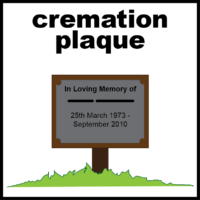
When someone you know has died…
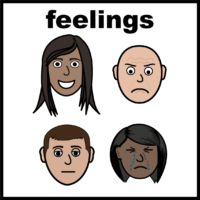
You might feel:
- Shocked
- Angry
- Tearful
- Sad
- Confused
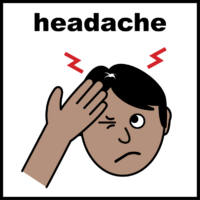
Changes you might feel in your body are:
- Headache
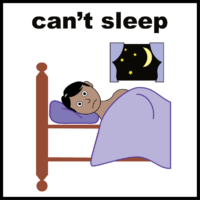
- Not sleeping well
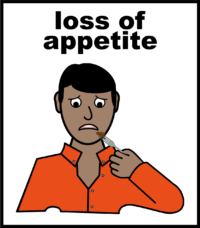
- How much you want to eat
The feelings you have when someone dies can go on for a long time. The feelings you have will change as time goes on.
It is normal to have these feelings, but everybody is different and will have their own way of coping.
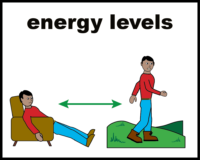
These feelings can take up a lot of energy.
Try to do what you normally do but it’s okay to rest too.
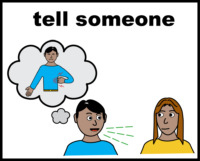
It is important that you tell others how you are feeling.
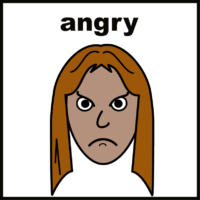
You might:
- Want to be on your own
- Get angry
- Look for the person who has died
- Ask for the person who has died
You can do these things to help yourself
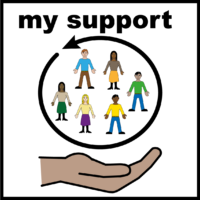
Talk about your feelings and thoughts with someone you trust. This might be a friend, relative or carer.
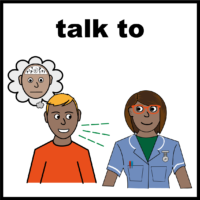
Talk to people you trust about the past in a positive way. It can take a while before you feel able to do this.
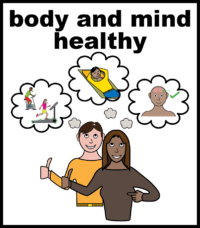
Try to eat well and get regular sleep
Plan nice activities that you can do to keep yourself busy and to have something positive to look forward to.
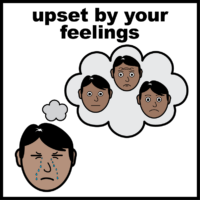
Changes in things you do are normal when someone you know has died.
BUT
- If they go on for a long time
- If you are worried, or
- If you feel you are not coping
You should ask for help or talk to someone
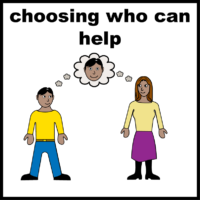
If you need more help, you can:
- Talk to someone who supports you
- Talk to your GP
- Talk to the person you have named in this leaflet
Useful resources

Beyond Words Books
Beyond Words Books tell stories of important and often difficult life themes, including death and bereavement, in pictures.
Dealing with a Bereavement
The Mencap website has some useful resources for families, carers and people with learning disabilities dealing with bereavement.
It also has an easy-read guide to using GriefChat, a free service where you can talk to a specially trained bereavement counsellor online.
Macmillan Cancer Information and Support
You can access easy read booklets using simple language and pictures from the Macmillan Cancer Support Website.

If you want to talk to someone about cancer and your feelings, you can also call Macmillan on 0808 8080000
Respond Helpline
Support people with learning disabilities, their carers, and professionals around any issue of trauma, including bereavement. Helpline: 0808 8080700
Cruse Bereavement Care
The national organisation for bereaved people.
Contact Cruse Bereavement Care, Cruse House, 126 Sheen Road, Surrey TW9 1UR.
Helpline: 0808 8081677
Our website
For information about our trust services, or general information on conditions and treatments and organisations offering support, please explore our website.
This information is one in a series of three:
- Leaflet 1: L562E Someone I know is going to die.
- Leaflet 2: L561E Someone I know has died.
- Leaflet 3: L560E Someone I know has died and they are going to have a funeral.
Feedback
Please let your care team know if you want to comment on whether:
- this information is useful
- any information is missing
- you do not understand the information
Do you have concerns or complaints?
If you have concerns or complaints about a service, you can:
- tell a member of staff
- call our complaints team – freephone 0800 052 0219
- email [email protected]
Information in other languages and formats
All our website and leaflet information can be made available in many formats. Please ask a member of staff if you would like this information in another language, large print, audio or braille.
Return to practical guides