
Wednesday 1 April 2026
Celebrating autism acceptance
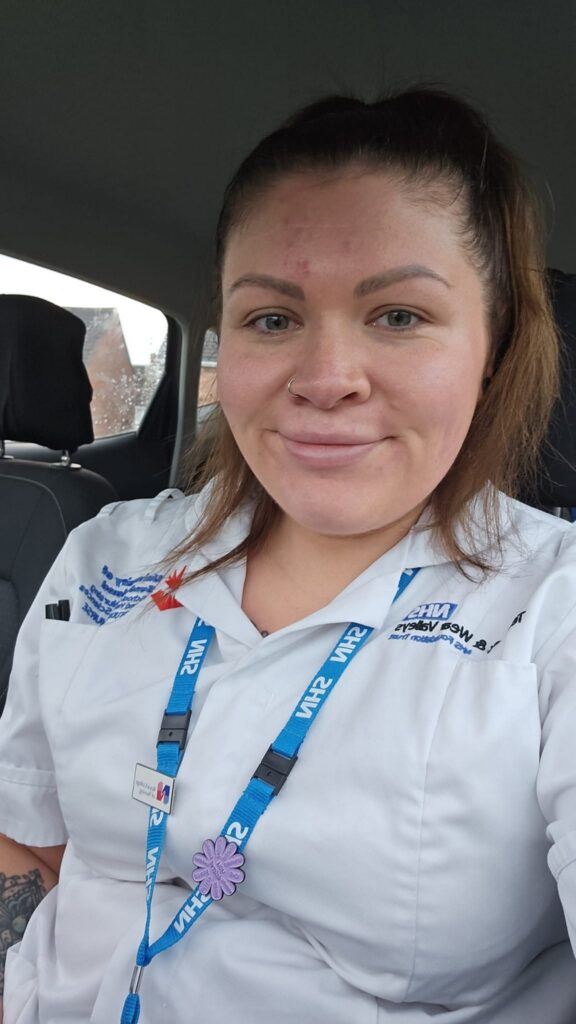
Sarah Wilson, 28, grew up in South Shields and now lives in Sunderland.
Describing herself as “neurospicy”, Sarah says she has unique strengths but also faces challenges in training to be a mental health nurse.
Being nominated for apprentice of the year
On making the shortlist in the Student Nursing Times Awards 2026, she said: “It’s absolutely brilliant. I never thought I’d get that, at all.
“Getting to where I am shows what is possible as an apprentice nurse. I never thought I would be able to get to this point, given the low rate of employment of autistic individuals.”
Set to complete her nursing degree apprenticeship in January 2027, Sarah works in our Easington North Community Mental Health team.
Finding strategies to face challenges such as sensory overload and autistic burnout
In February 2023, a month into her four-year degree apprenticeship, Sarah was diagnosed as autistic – aged 25. She says she’s always known she was different but hadn’t pursued an autism diagnosis before as she felt it fell outside of “social norms”.
Sarah says she needs a lot of personal and external support to manage academic demands and clinical practice. This support and adjustments help her to face challenges such as sensory overload and autistic burnout.
She said:
“The NHS trust I work at has been brilliant with adjustments, as I have had to adapt to many changes throughout the programme of different placements.”
Some strategies Sarah uses include factoring time for her wellbeing and being open about her communication differences.
She said: “I’ve always been upfront with people on how I communicate, as sometimes I can appear blunt when communicating directly.”
Bringing autistic strengths to her nursing career
While Sarah faces challenges as a neurodivergent nurse, her neurotype also brings benefits, and she says traits such as having a strong attention for detail make her a better nurse.
She said: “I believe I can see subtle changes that others may miss. This means I can address things earlier with patients. I’ve been given lovely feedback on this.
Because I have lived experience, I feel I form a better connection with patients. It means I can provide more patient-centred and empathetic care, due to me knowing the struggles they may be encountering.
“I have a heightened sense of social justice and empathy. This can make me an exceptional patient advocate.
“I can also be really good at creative problem solving in crisis situations. I am also a creative thinker.”
Encouraging other neurodivergent people looking for a career in nursing
While completing her nursing apprenticeship many of Sarah’s colleagues have remarked on her growth in confidence.
She says:
Don't doubt your ability! If you have a goal go for it. With the right support, adjustments and team around you, you'll flourish. Your lived experience is invaluable.”
Receiving recognition for compassionate care
Bernadette Wallace, senior nurse practice placement facilitator, said: “Sarah is an exceptional nursing apprentice, she is kind, compassionate and courageous.
She has approached every aspect of the nursing apprenticeship with enthusiasm and total commitment. She is an inspiration to others with her professionalism and determination to succeed in her nursing apprenticeship.”
During her apprenticeship, Sarah has volunteered to encourage school aged young people to consider a career in nursing.
Bernadette says: “The pupils responded well to Sarah due to her friendly and approachable manner and ability to articulate a positive perspective of the nursing profession. I am sure that she has inspired some potential future nurses.”
Alongside the Nursing Times nomination, Sarah has also been nominated for Apprentice of the year at the University of Sunderland awards.
Sarah will be attending the Nursing Times award ceremony in London on 24 April.