
Your care team should discuss the details of this leaflet with you.
LIO will only be used if you choose to opt in
Before LIO is used, a member of staff will explain:
- what LIO does and does not do
- what information it provides, including personal data related to clear and anonymised video data
- how your information is protected
- your personalised ability to choose how the system is used
What does LIO look like and what does it do?
You will notice the LIO housing unit in your room above your bed.
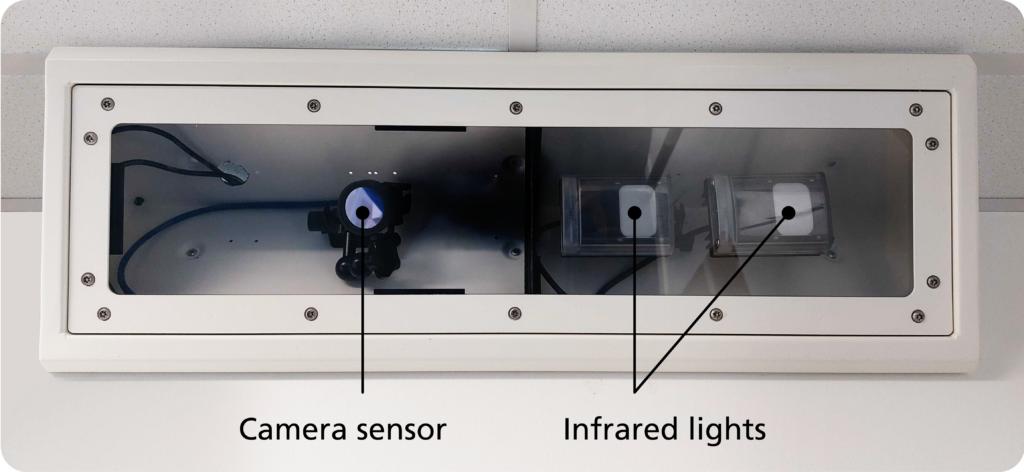
- LIO uses an infrared-sensitive camera and sensor system that can help staff monitor aspects of your physical wellbeing without needing to enter your room.
- If you choose to opt in to using LIO, the system can measure your breathing rate and pulse remotely (non-contact physical observations). It is important that you know that to obtain your pulse and breathing rate, staff can see a clear image of you in your room for up to 15 seconds.
- A handheld device (pictured below) will let staff know the activity in your room. For example, it will let them know if you are in your room or in bed, but no images of you will be seen. It will also let them know if someone else has entered your room. These are intended to keep you safe and let staff know that you may need support.
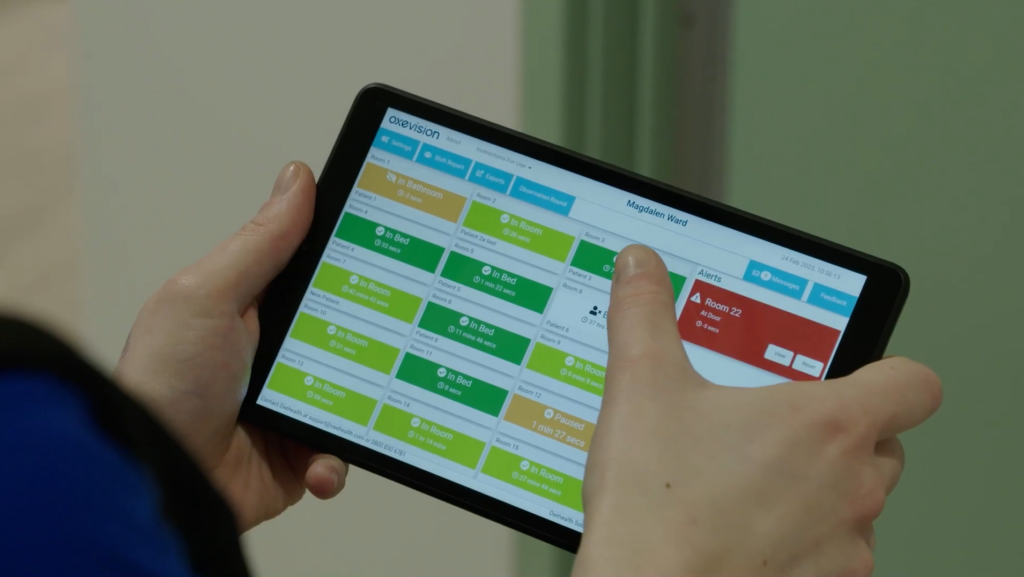
- LIO will provide an alert that staff can hear on the handheld device if you are in your bathroom for longer than three minutes. It will also provide an alert if you are stood at your door longer than two minutes (adult mental health and secure inpatient wards only). This is so staff can offer support to you if needed.
- In mental health services for older people wards, LIO will also provide an alert staff can hear if you are at the edge of your bed or out of bed.
- LIO can also provide clear or anonymised video data which will be explained below.
- LIO does not replace care from the nursing team, therapeutic engagement, observations or clinical judgement.
- LIO can be used to complete observations at night. This is only if you are on hourly general observations. This is done by using the vital sign function, which would let you have an uninterrupted sleep, as staff may not need to enter.
What reports can staff download from LIO?
- Vital signs trends and measurements. This includes breathing rate and pulse. Vital sign trends are not medically accurate on LIO, however if a staff member obtains your vital signs, these are medically accurate.
- Activity reports. These show the activity in your room which will include time in bed, in room, in bathroom and at door. It will also show if an alert has been heard by staff.
- Sleep reports. This will show the amount of time you have been asleep. This function is not available in all wards.
What will staff do if they hear an alert?
Alerts will be sent to staff on the handheld device if:
- you are at your door for longer than two minutes (adult mental health and secure inpatient wards only)
- you are in your bathroom for longer than three minutes
- you are at the edge of bed or out of bed (only at night in mental health services for older people wards)
If staff hear an alert, they will come and check on you in person to make sure you are okay and do not need any extra support.
What else can LIO do?
Staff can request clear video data (within 24 hours) and anonymised video data (after 24 hours and up to 28 days) from LIO. This may be requested if in there has been any of the following in your room:
- safety incident
- safeguarding concern
- criminal activity
This may be shared with third party organisations, for example, the police or legal authorities.
Every request has to be approved by our chief nurse and deputy chief nurse.
What LIO does not do
- Record sound.
- Replace nursing care, observations and therapeutic engagement.
- It will not alert to staff if your physical health is deteriorating in your room.
Requesting information from LIO
- If you have consented to LIO being used as part of your care, you may also request access to information relating to you.
- Because clear video information is automatically deleted after 24 hours, requests should be made as soon as possible and within 24 hours of the event wherever possible.
- Please speak to a member of staff if you wish to make a request.
How your privacy is protected
Your privacy and dignity are important to us.
- Your personal information is protected by NHS standards and UK data protection law.
- Access to information is strictly controlled.
- Any request to access information is managed through approved trust processes and information governance requirements.
- Information is only used for purposes connected with your care, safety, or approved investigations.
This leaflet has been co-created with patients and carers. Download the LIO consent form.
Feedback
Please let your care team know if you want to comment on whether:
- this information is useful
- any information is missing
- you do not understand the information
Do you have concerns or complaints?
If you have concerns or complaints about a service, you can:
- tell a member of staff
- call our complaints team – freephone 0800 052 0219
- email [email protected]
Information in other languages and formats
All our website and leaflet information can be made available in many formats. Please ask a member of staff if you would like this information in another language, large print, audio or braille.


