
Paul Bernard, a consultant psychiatrist at our trust came across mindfulness while travelling in India and Sri Lanka in the early 1980s, before starting his medical studies at university.
Mindfulness is about paying attention to the present moment and becoming more aware of our thoughts and emotions. It can help us be kinder to ourselves, respond better to stress and feel less overwhelmed.
Paul Bernard, Mindfulness Lead Consultant
Almost a quarter of a century later, by this time a consultant psychiatrist in our trust, Paul began wondering whether mindfulness could be helpful in clinical practice. He learned about a new approach called Mindfulness-Based Cognitive Therapy (MBCT). This combines training in mindfulness meditation with cognitive behavioural therapy (CBT) – a well-established talking therapy already used in the NHS.
Paul ran a few courses for groups of our staff, which were met with great enthusiasm. It was at this time that Jo Cromarty, then an occupational therapist with trust, attended one of the courses to find out more. Jo too was interested in finding out more about the clinical benefits.
I had discussed MBCT with a colleague but wanted to experience it myself before introducing it to patients. I knew Paul had been running courses for staff, so I signed up for one. I could quickly see how helpful this would be for the service-users of my team.
Jo Cromarty, Mindfulness Team Manager
Excited about the prospect of the potential it could have for patients, Jo asked Paul to run a course for some of the people who used her service. This was the first time it had been delivered to patients in the trust, and the results were really positive.
Making the case
Paul recalls: “After receiving such positive feedback from both staff and patients we wanted to be able to continue the sessions on a regular basis. Together, me, Jo and a colleague, who had also done the staff course, decided to put a case forward. We wanted senior managers in our Trust to understand its benefits and to experience it first-hand.”
So, when Paul was asked to talk to the executive team about the sessions, he did something unusual. He delivered a mindfulness session during the meeting.
I’m pretty sure no one had ever done anything quite like this with the executive team before, but it worked! Our then Chief Executive, Martin Barkley, really saw its potential. He agreed that we could start delivering regular mindfulness courses for staff to support their wellbeing.
Paul Bernard, Mindfulness Lead Consultant
From strength to strength
Initially the sessions began as a two-year project for staff, led by Jo and Paul. Then, in 2015, after seeing the benefits, the trust invested in a dedicated mindfulness team, with Paul and Jo at the helm. As well as supporting staff, the team also began delivering clinical mindfulness courses for adults aged 18 and over who were experiencing depression.
As one of the first services of its kind nationally, the team has received national awards and a decade later, the service continues to flourish.
Our Mindfulness service has grown, with more dedicated staff and has supported thousands of people across the region, including patients with depression and health and social care professionals. The team also trains other NHS professionals across the North of England to teach mindfulness.
A unique feature of our clinical service is that people who live with depression don’t need to get a referral from their GP – they can get in touch with us directly. The first step is usually to attend a brief ‘taster’ session, which might be in-person or online. This helps them to get an idea about what we offer. Following this, they can then sign up to take part in a longer course.
Jo Cromarty, Mindfulness Team Manager
Real life impact – Stephen and Ann’s story
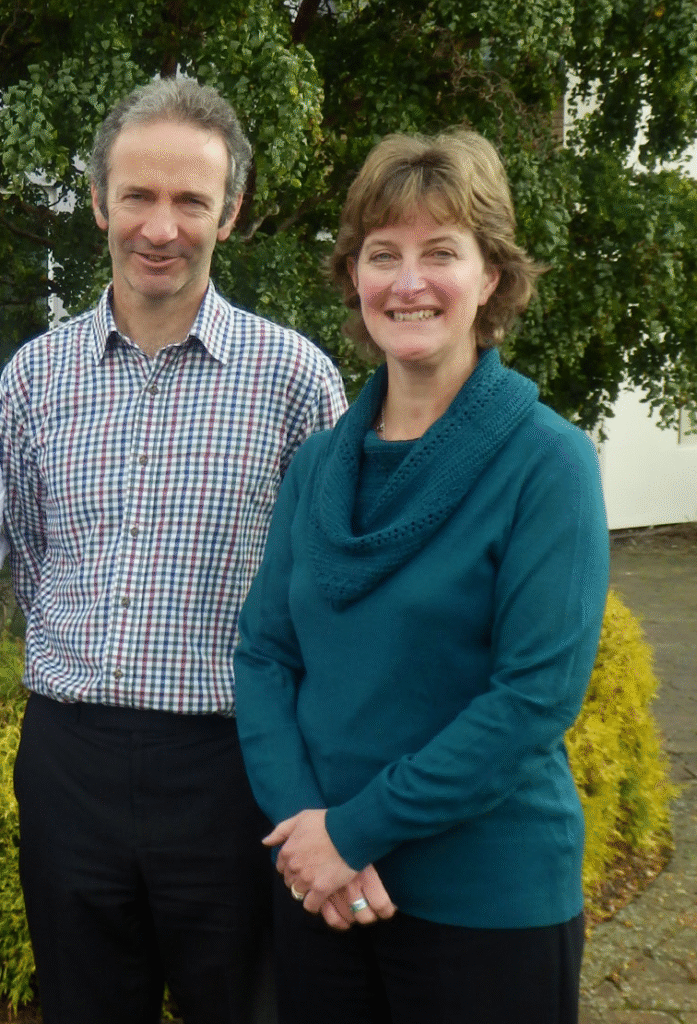
Stephen and Ann first attended one of our mindfulness courses in 2019. They now incorporate mindfulness into their daily routines. They’re also peers for the service, attending some of the team’s courses to share their experiences and supporting others through the process.
Stephen explains: “We attended our first mindfulness course in 2019. We were caring for our adult son who needed a lot of support, and we were emotionally and physically depleted.
“Someone we knew had recently completed the course and told us about it. It sounded like it could really help us, so we looked at the online information and applied.
Our course experience
“Our course leader set a positive atmosphere from the outset. He emphasised that the mindfulness techniques and information provided during the course needed to be regularly practiced each day to maintain and strengthen our psychological resilience. He explained that it would enable us to manage any setbacks that may cause us to slip back into our previously negative, unhelpful patterns of thinking.
“We learnt a range of practices, along with the theory behind mindfulness. I found the course illuminating. It untangled my confusion about what was going on in my mind that caused me stress, anxiety and depression. It also gave me practical techniques to recognise and redirect unhelpful patterns of thought.
Techniques we use
“One concept I found particularly helpful is that our thoughts are not real and can simply be observed and let go of. I regularly use this concept when I’m experiencing unhelpful thoughts or catastrophising events in my mind.
“I use a technique that I call ‘sitting in a cinema’. I see myself sitting alone in the cinema and, the thoughts as scenes appearing on a cinema screen. As I notice the distance between me and those thoughts, I get a sense of calm, and the thoughts lose their power to unsettle me. They then usually fade away and if new thoughts come up on the ‘screen’ they seem to pop like bubbles. When I realise, I’m again absorbed in thinking, I go back to ‘sitting in the cinema’. I feel pleasantly relaxed when metaphorically sitting in the soft light of the spacious cinema with just a blank screen.
“As well as the practice of observing my thoughts, I find the process of paying close attention to my senses and bodily movements to be helpful. It can be very calming and relaxing.
“I usually do two 40-minute sitting practices a day. The first one is when I get up in the morning and the other on an evening. Both Anne and I also listen to a 30-minute guided body scan when we get into bed. It settles our minds and prepares us for sleep.
“In mindfulness there are also many shorter practices from those with busier lives and less time to spare. Anne also uses the ‘3-step-breathing space’ technique in situations when she may feel stressed.
Why we’d recommend mindfulness to others
“It’s great that the Mindfulness team also provide ongoing support even after you’ve finished one of your courses. It helps encourage you to keep up the practice. We had the option of weekly mindfulness ‘drop-in’ meditation/teaching sessions, along with optional days of mindfulness.”
I would say mindfulness is somewhat similar to physical exercise but for the mind. As exercise helps build physical resilience, strength and good physical health, MBCT and other forms of mindfulness practice do the same for the mind. But in the same way as exercise takes time and commitment, so does mindfulness. If you stick with it, it can really help to improve your mental health.
Stephen, a mindfulness participant and peer support
Find out more
If you experience depression and want to explore how mindfulness might help visit our mindfulness pages for more information.
If you work in health and social care and want to try some mindfulness to support your wellbeing, you can find out more about our mindfulness courses for staff too.
Alternatively email [email protected] or call 01325 552017.