
Sarah explains: “My dad lived with mixed dementia for over 15 years, and it was through my own and my family’s experience of caring for him that I was drawn into the work I do today.
“I’ve now been part of the Research and Development team at TEWV for nine years, and my dad’s dementia journey is always with me.”
The first signs of dementia
Sarah’s dad’s dementia developed gradually with the first signs appearing around 2009.
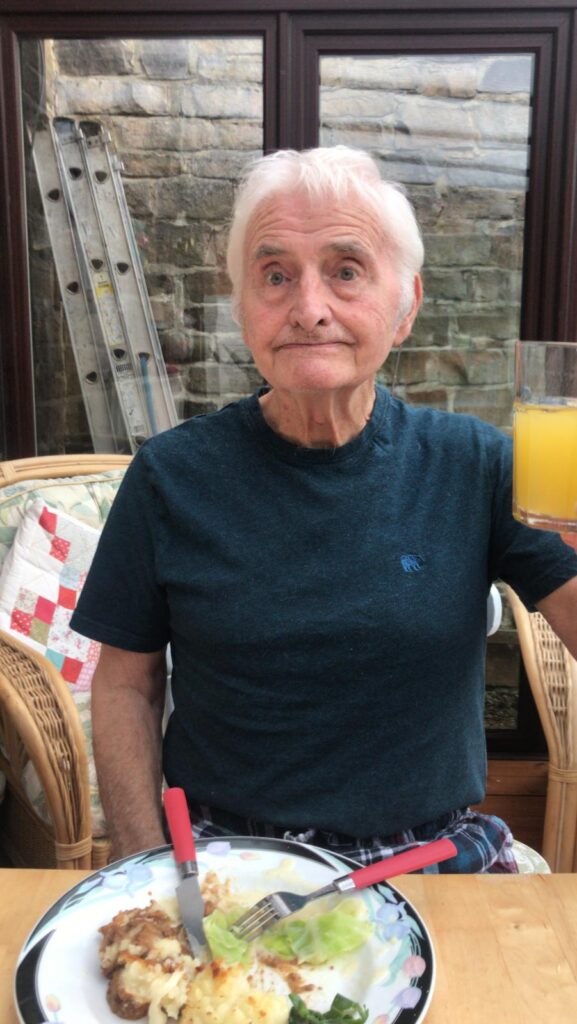
“The first thing we noticed was a change in his mood,” Sarah recalls. “And over time, he became more confused. One moment in particular has stayed with me. My son, who was five at the time, came home one day and told me that ‘grandad was driving around the roundabout lots of times’. When I spoke to my mum, she was really surprised and couldn’t understand why. It’s obvious now that dad had lost his bearings and couldn’t work out where he was.”
The dementia diagnosis
In 2010, Sarah’s dad attended a memory assessment and shortly after he was diagnosed with vascular dementia.
“There wasn’t really much support following diagnosis,” Sarah explains. “Once medication is in place, people are often discharged back to their GP. As a family this can come as a surprise as you’re not quite sure what to do next.”
Dad’s decline
In 2019, Sarah’s dad’s condition deteriorated. He began wandering away from home on his own, would get agitated and began to struggle to recognise his family. It was at this point that the family, understandably worried, asked for a further assessment. This led to a new diagnosis of mixed dementia. This is when a person has more than one type of dementia, most commonly a combination of Alzheimer’s disease and vascular dementia.
Following his new diagnosis, her dad attended a six-week Cognitive Stimulation Therapy group at Reed Marsh House in Redcar. This was run by TEWV. “He absolutely loved it,” Sarah says. “It made such a difference for him.” Sadly, soon afterwards the COVID-19 pandemic hit.
“Lockdown was incredibly difficult. Dad didn’t understand what was happening and became frustrated that he couldn’t do his usual everyday activities.” Over the following year, his health deteriorated and he became increasingly frail. He was in and out of hospital before sadly passing away in September 2020.
Career turning point
Sarah’s career path had long been connected to care. “I’ve worked in social care all my life really. My mum and dad owned a residential home, which I grew up in from the age of 13.” But it was her dad’s diagnosis that became a turning point.
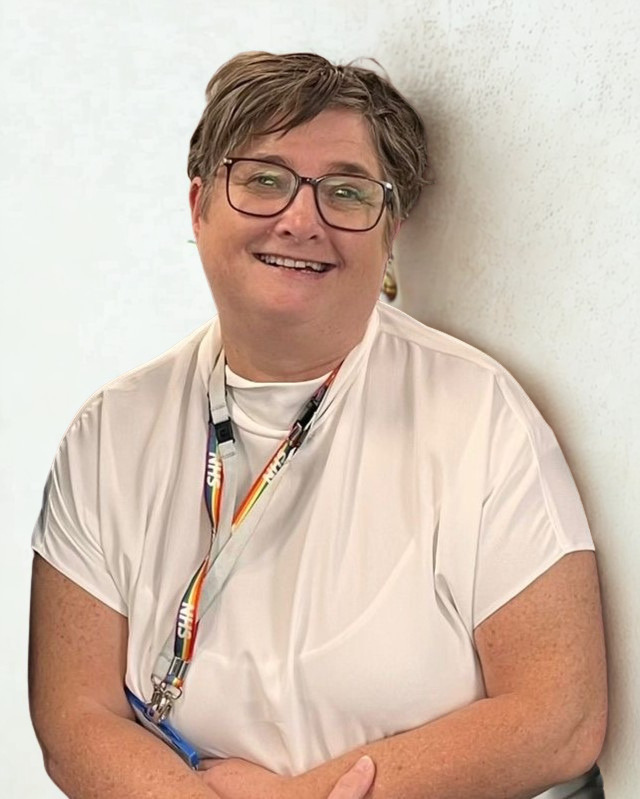
“Watching my family, especially my mum, navigate such a challenging and emotional journey gave me the drive and passion to want to do more,” she says. “I wanted to improve care and quality of life for people living with dementia and their families.”
Sarah returned to education, completing an access course before studying psychology at Teesside University. In 2016, after graduating, she joined TEWV, beginning her career in the Research and Development team, where she’s stayed to this day.
In 2025, she completed an MSc in Inequality in Society, with a focus on dementia. Her study helped highlight the inequalities that people living with dementia and their families face.
Why research
Sarah explains: “There is support out there, especially via the charitable sector, such as Age UK, The Alzheimer’s Society, Dementia UK, the NHS and local authorities. However, from my studies and own personal experience I know that this can vary significantly according to where you live. This has made me more determined, in my role. I want to do what I can to improve the lives of those currently affected by dementia and for future generations.”
Sarah’s job involves working on multiple studies focused on mental health in older people. “I feel honoured to be able to make a real difference to people’s lives through the work I do,” Sarah says.
Most recently, she has helped open the READ-OUT (REAl World Dementia OUTcomes) study – a major five-year research project evaluating blood tests for earlier dementia diagnosis.
She is also working on the FAST (Feasibility and Acceptability of Scalable Tests) study, led by the University of Oxford and Dementias Platform UK in partnership with the NHS. The pilot study explores whether combining blood biomarkers with online memory assessments can effectively monitor brain health and detect dementia risk earlier.
Join Dementia Research
“One of the things I’m most proud of is increasing our Join Dementia Research referrals year on year,” Sarah says. “Every person living with dementia, and their family and loved ones, has the right to be involved in research and to be able to make a difference to others.”
Join Dementia Research matches people living with dementia, carers and volunteers with dementia-related research opportunities, helping to shape better care and treatments for future generations.
A passion for change
“Sadly, dad isn’t with us now,” Sarah reflects, “but my passion for change and improvement remains my ultimate goal. My mum and dad are my biggest inspiration.”
For Sarah, research offers hope. “It’s essential to finding a cure for dementia, improving early diagnosis, and developing treatments to slow or stop progression. Research empowers people, and I feel privileged to be part of that every single day. I know my dad would be proud of what I’m doing.”